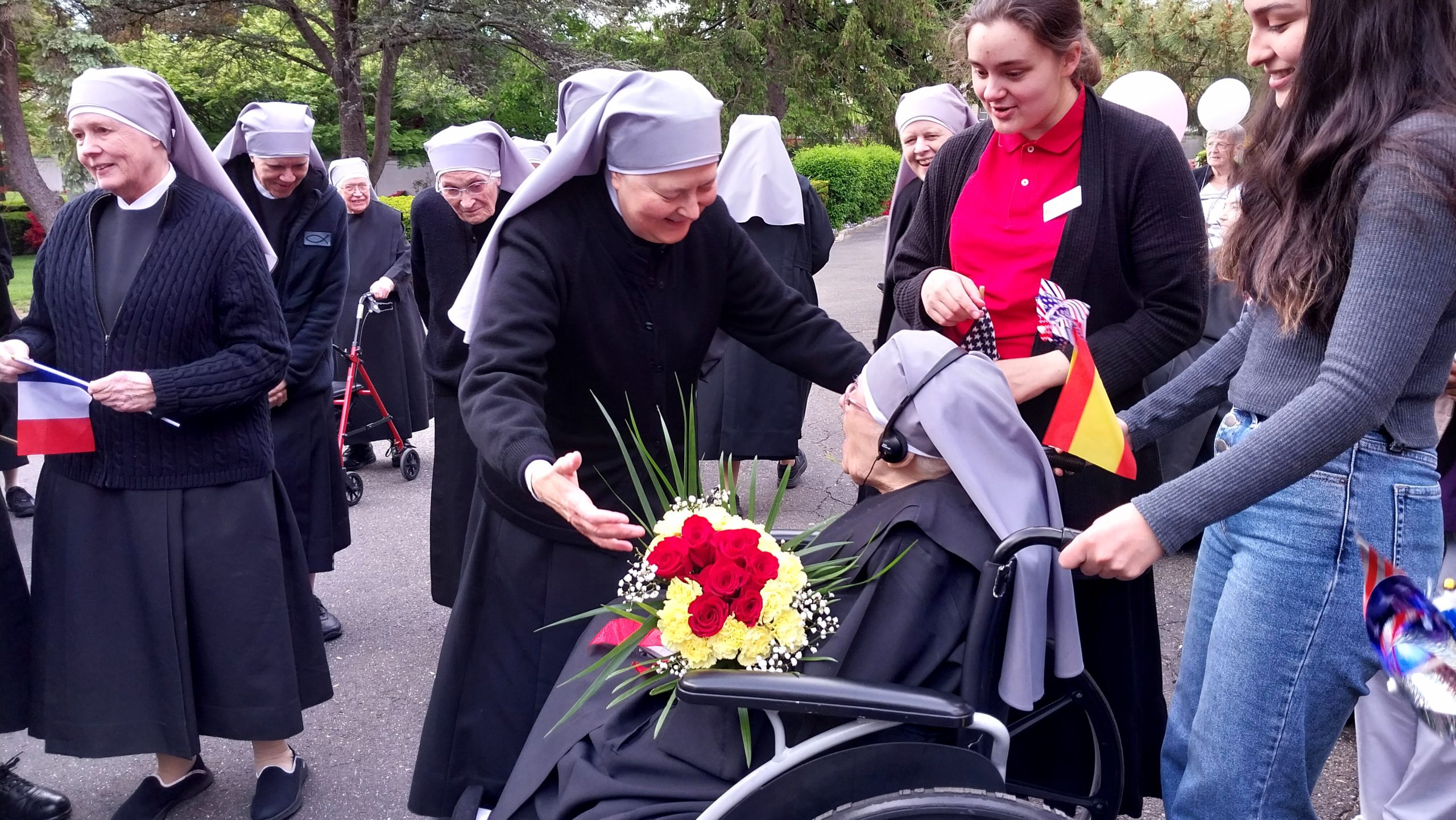
Since 1869 when the first home of the Little Sisters of the Poor opened on Calvert Street in Baltimore, an estimated 15,000 elderly men and women of all backgrounds and with very limited financial means have found a home with the Little Sisters.
The Civil War had barely ended when on April 6, five Little Sisters of the Poor arrived from France to begin their fourth foundation in the United States. They were welcomed by the Visitation Sisters who provided them with many of the practical items needed to begin their work of caring for the aged poor. Arrangements for this foundation were made by Father Ernest Lelièvre, a talented civil and canon lawyer, who devoted his entirely priestly ministry to spreading the mission of the Little Sisters beyond the borders of France.
The next day, a Wednesday, they moved into two small rented houses on Calvert Street. The poverty was great, but the generosity of the people of Baltimore was greater still. A year later, they moved into a new building on Valley Street not far from Johns Hopkins Medical Center, where they would stay for 100 years.
In the mid 1960's, funds were successfully raised for the construction of a then state-of-the-art home for the aged in Catonsville, dedicated under the patronage of St. Martin of Tours. The Little Sisters chose this name in honor of Archbishop Martin J. Spalding who first extended to them the invitation to minister to the poor in Baltimore. It was during their centennial year, on May 25, 1969, that the Little Sisters moved into the “new” St. Martin’s Home, originally designed for 240 aged persons. St. Martin’s Home also serves as the Provincial Residence for the Baltimore Province of the Little Sisters of the Poor. Currently, ten Homes, in seven states and the District of Columbia, comprise the Province.
Over the years, the home has undergone many renovations. Today, Residents enjoy private rooms and expanded activity areas. Apartment units enable the well elderly to benefit from the family atmosphere while maintaining their independence. Currently, studies are being undertaken to see how the Little Sisters can continue to welcome the needy aged for many years to come. Mother Geraldine of Mary, Superior, often says, “Relying totally on St. Joseph, and with the help of our many friends, we are confident we can reach out to and care for the aged poor, providing the services that future generations of older persons will require. We are committed to meeting the changing needs of the elderly of today and tomorrow.”
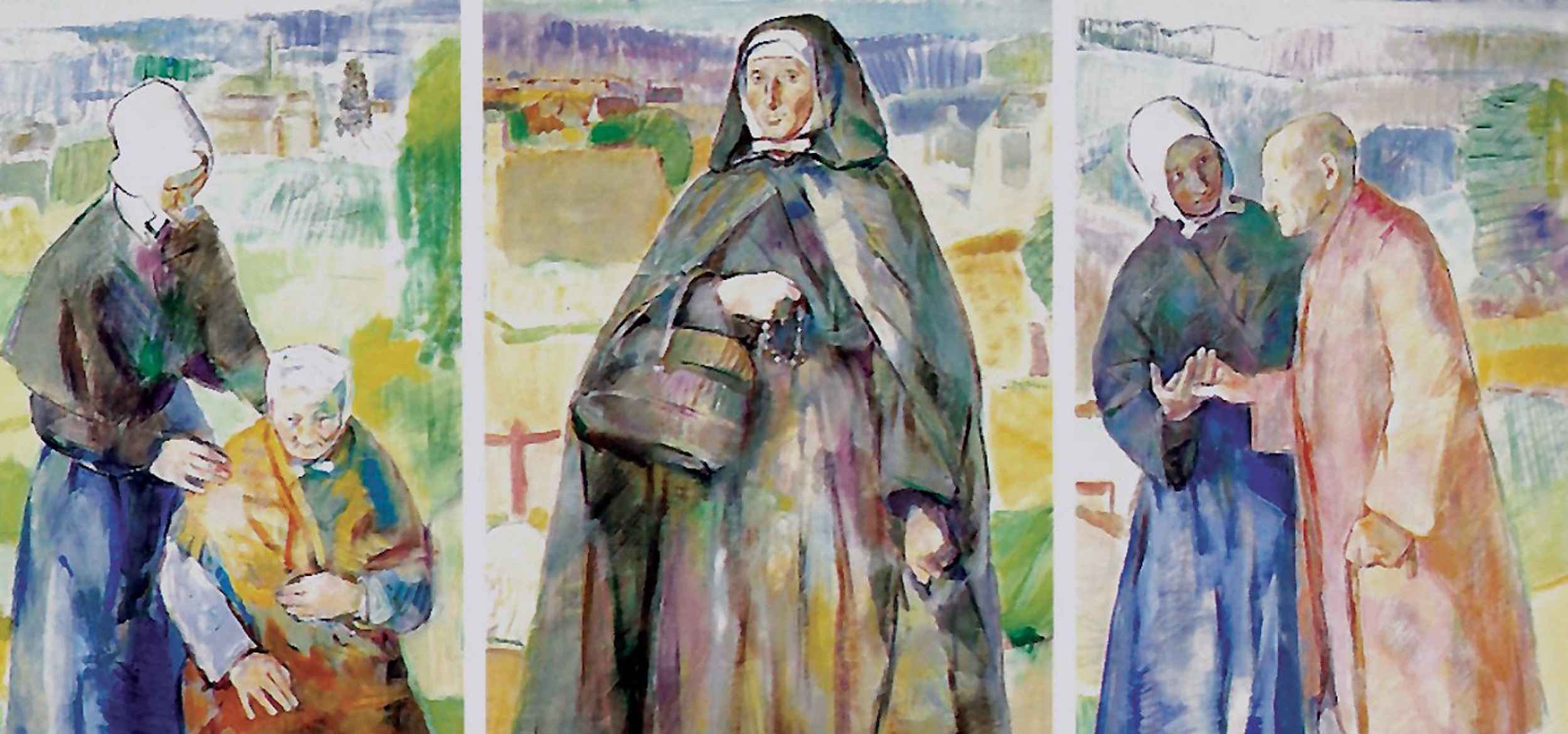
From the small beginnings back in 1869 right up to the present day, the Little Sisters of the Poor in Baltimore have never waivered in their desire to humbly and joyfully live the charism of their foundress, Blessed Jeanne Jugan, who said: “Never forget that the poor are Our Lord.”